5 days after Peter’s departure from Kalamata we had a weather window to head out once again. The strong southerlies had abated but they had left an uncomfortable sea which we encountered on our 30 mile trip to Methoni. Every way our course took us, so the moderate wind veered round to head us, we encountered a 120 deg wind shift on the trip! Murphy was out there! We beat some of the way but had to give up and motor more than half the distance to make our port in reasonable time. Anchoring in Methoni became a new experience. The anchor held well but the swell coming into the bay made for rock and roll. We moved further in when space became available which was an improvement.

We made the 7 mile trip round to Pylos ahead of a forecast of more strong winds and had just got tied up alongside a large catamaran in the ‘marina’, when the weather came in. Pylos is situated close to the entrance on the south side of a large inland sea, Navarinon Bay, surrounded by land on 3 sides with a relatively narrow entrance open to the south west which we had expected to afford some shelter from the prevailing north westerlies.
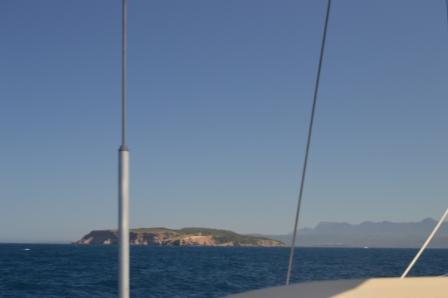
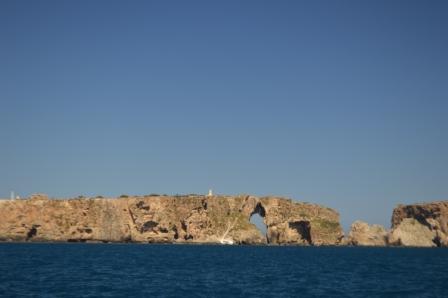
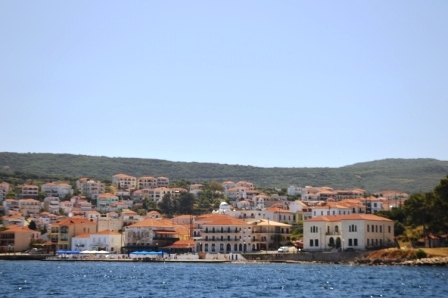
Not a bit of it, the bay became a white frothing mass and all day boats were coming in to the ‘marina’ looking for a secure place to tie up. Space was at a premium as the useful, deep but dysfunctional marina is a mess of abandoned ships and boats, many small local boats, tangled moorings and lack of bollards to tie up to! It was so sad to see this safe harbour fail to accommodate the demand simply due to a total lack of organization, and several large boats were forced to go outside and anchor bow into the breakers. Sadly it is very Greek.
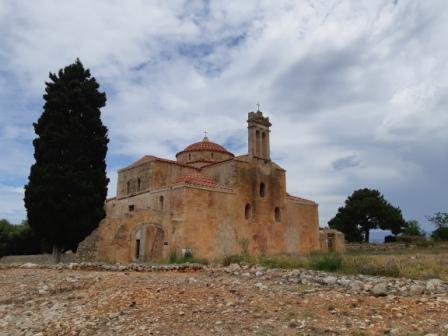
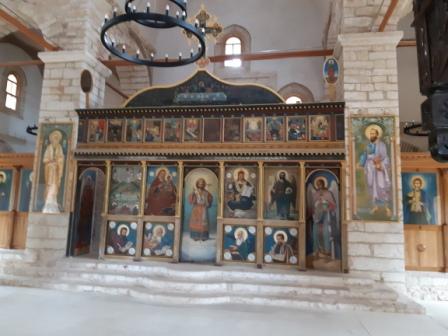
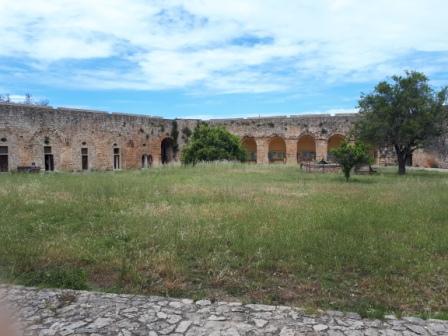
We arrived Thursday and knew we would be staying until after the weekend, so we planned time ashore. Our first visit was to the Niokastor Fortress of Pylos. It had been built by the Ottomans in 1573 to control the sea routes from east to west in this part of the Mediterranean. From 1686 the fortress was under Venetian rule, but fortunes and occupants changed regularly until 1830, when the town of Pylos was established outside the fortress walls. The fortress was abandoned and its acropolis used as a prison but reoccupied by the occupying forces during WW11.The fortress was huge, a large enclosure protecting the main core of the settlement and a second hexagonal enclosure around the acropolis. There was lots to see including a well restored church of the Transfiguration of Christ that had originally been built as an Ottoman mosque.


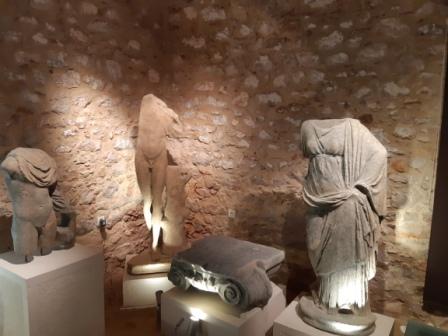
Apart from all this the fortress housed some wonderful museums exhibiting the archaeology of ‘underwater antiquities’ which was a magnificent hands-on display of the spoils from various shipwrecks around the Peloponnese dating from several centuries BC! We learned quickly that the most important commodity being shipped around throughout history from very early beginnings was wine, safely transported in large clay vessels or ‘amorphora’. There were many on display and it was amazing to touch a clay pot from 2nd century BC, complete with a ‘hall mark’, a process of marking invented a long time ago.

One evening we were returning to Déjà Vu after a coffee ashore and in the darkness on the concrete walkway well away from the main part of the marina where we were moored, we came across an unnerving and eerie scenario. A black car had reversed a long way along and was parked hidden, with two men dressed in black standing looking out. We crept passed and climbed aboard Déjà Vu, just a few metres away feeling the need to watch ourselves but more importantly batten down the hatches and turn off the lights! We maintained high security all night and have no idea what, if anything, took place, but our imaginations were working overtime.
We had been told by some locals of recent cases of people smuggling and there were abandoned boats in evidence that reputedly had been impounded by the port police. This was in our minds and it was quite chilling that we decided we did not want to be witnesses to any similar activity.
The next day we decided to take a taxi round the bay to the new town of Yialova. This is a completely new resort town, with a promenade featuring up market shops and restaurants, overlooking a sandy beach. A very pleasant spot. We lucked out and chose what turned out to be the best restaurant for a long lunch with plenty of chilled Rose.
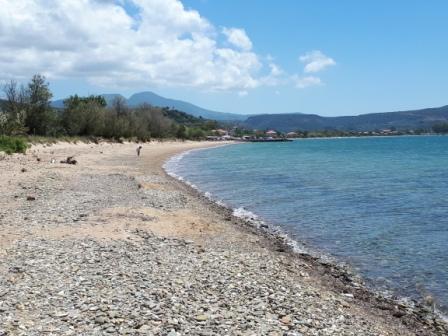
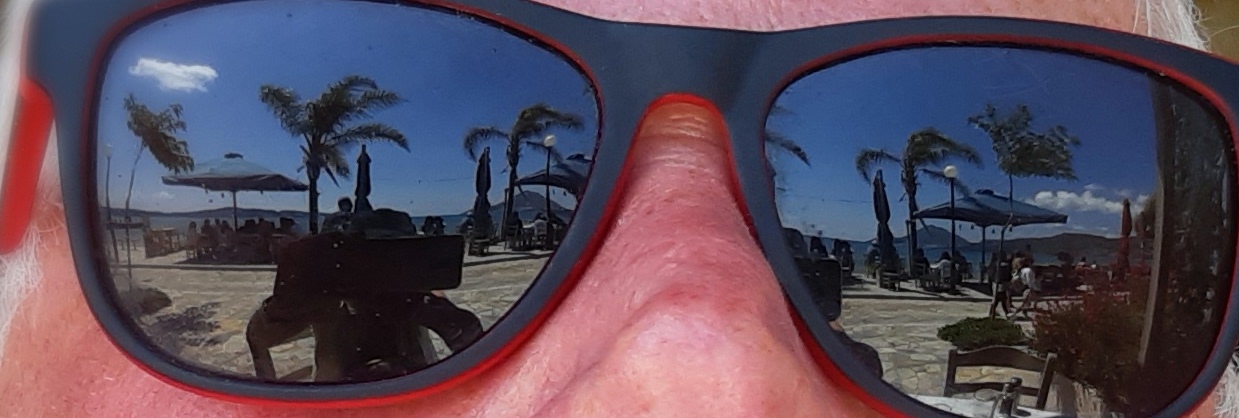
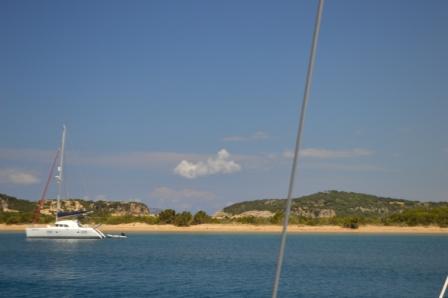
Glad to be departing from the marina we sailed around Navarinon bay before heading back to the anchorage at Methoni for a couple of nights. We were able to get water ashore which enabled a few more showers on board but having lugged 50 litres back to the boat we were conscious of the weight that the 450 litres in our tanks represents . We made a day sail of visiting Port Longos on the adjacent island to the south, just an anchorage with nothing but nature for company, before heading up to visit Finakounda to the north. We anchored offshore in a bouncy sea keenly expecting it all to go calm once the afternoon sea breeze died down, which true to form it did. Finakounda is a pretty seaside resort, quite touristy and noisy with music late at night, but it did have good beaches. It is unfortunately not very sheltered and we decided it was not the place to be for the next night with stronger winds once again in the forecast.
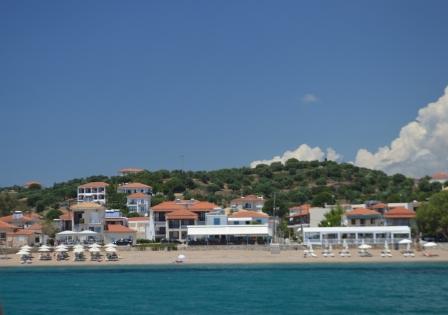
We backtracked to the safe anchorage at Methoni simply so that we could return to a very good restaurant that we had visited with Peter on his birthday a few weeks earlier!
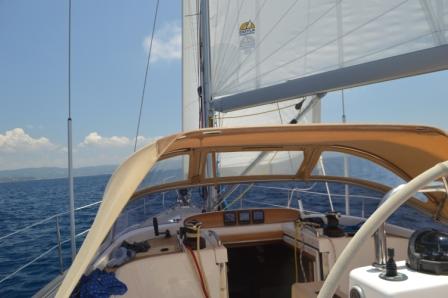
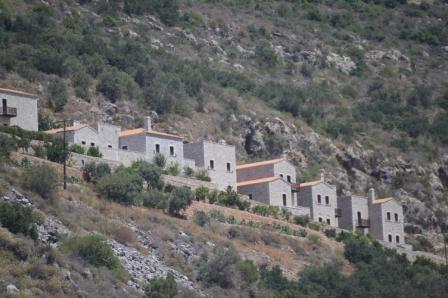
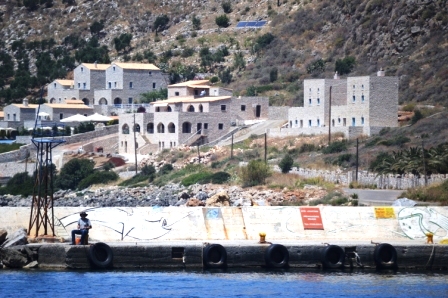
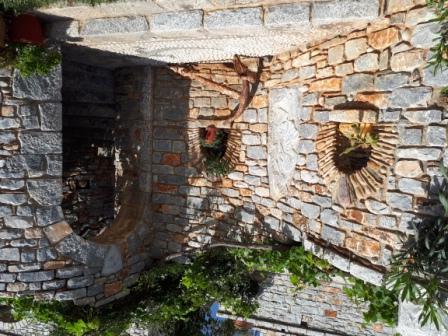
With calm winds at last on the horizon we set off East and had an overnight stop in South Koroni before heading further east to the bay of Limeni. Limeni has eluded us many times as it is open to the prevailing westerly winds and therefore not a great place to go in fresh conditions. We had a calm and quiet visit which was very pleasant and as, at last, the air and sea temperature were on the rise, we enjoyed plenty of swimming. The air temperature went from 22 Celsius to 32 Celsius in one day and is now set well into the 30’s for the foreseeable future. It is very hot but fortunately the sea temperature is now an enjoyable 22 degrees. Being on the Mani peninsular there were lots of fascinating examples in the bay of the very particular Maniote architecture, mostly modern builds in the picture we took, but as you can see quite Moorish and very un-Greek in style.
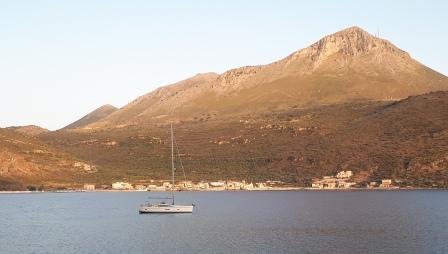


From Limeni we made the final trek back to Kalamata as we have a flight booked home in a couple of days. It is sweltering hot now and it is not pleasant being in a Marina, but the laundry will get done and the boat will get a spring clean. We have refuelled and will revittal when we return in just about a week to start the next phase of our journey which will be to complete our circuit around the Peleponnese.
 Deja Vu
You must be logged in to post a comment.