For those of you non sailors who follow our blog, apologies for constant references to the weather, but sailors will understand that this drives our days, our thinking and our plans. The forces of nature are huge and need to be treated with great respect. Life on the boat is very simple and subsistent. We depend on the elements, worry about where the wind is coming from and how much of it there is, where we can get water (and wine) and the next loaf of bread. After the sailing, reprovisioning and doing the laundry are major tasks in our day. We read kindles in daylight and sleep in the dark. We are truly distanced from manmade troubles of the world as our exposure to the media is limited to quick fire bursts of internet time on our ipads in cafes sporting wifi, and the priority is always weather forecasts and emails from family and friends. The news takes second place in our sea faring world.
Since leaving in early May, we have had very unstable weather conditions and not more than 2 days of settled weather in a row in which to make carefree passages. Writing this from Brindisi on June 17th we are rolling around in the Marina with gale force winds relentlessly buffeting us and they are not forecast to abate any time soon. We may be holed up here for a while, so time to tell the story of our time in Italy so far.
Given the unsettled nature of the weather we chose our departure from Lastovo carefully to try and miss the frequent storms and southerly winds that had featured through the whole of May. The 4th June appeared to be our best bet as light winds were forecast from the Northwest.
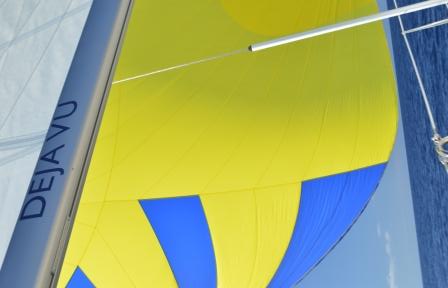 We checked out early morning with the Police and were on our way heading to Vieste in Italy some 58 miles away. We motored for three hours and then some wind arrived, giving us a broad reach. We sailed slowly and then put up the dreaded cruising chute which gave another knot. The wind lasted only a couple of hours and then we had dead calm. Motoring on we arrived in Vieste at 6pm to moor up on Caterina’s pier in the harbour.

Vieste is a busy holiday resort with a large well populated beach and both new and old towns. The old town occupies the limestone cliff area to the south of the new town and is very attractive. By contrast the harbour area is quite messy and has many tripper boats coming and going to take tourists to the Tremeti Islands some 10 miles away. There is a new marina in the harbour built with EU money but never finished (the money ran away apparently) so most boats moor on the old piers on the opposite side.

This was our second trip to Vieste with our first visit to the old town well documented in our blog for 2013. This time instead of taking the camera we took shopping bags to reprovision before our friends Sharon and Peter Matthews joined us for 6 days with the hope of a ride to Bari! Vieste has an excellent street market where we bought 2 litres of very drinkable wine for 5 euros and the best olives we have ever tasted in addition to lovely fresh fruit and vegetables.
This week ahead was plagued with thunderstorms. We had to choose our passages carefully and dodge the worst of the storms that were all around.
We did the 60 miles to Bari in two hops.

Our first port of call, 40 miles south of Vieste, was the delightful harbour of Trani. The marina sits inside the harbour which is flanked on all sides by the old town with its many fine and interesting buildings. Towering above all is the magnificent cathedral with a simple pious atmosphere and mosaics and frescoes to see in the crypt. After our sightseeing we decided to dress smart and go to a recommended restaurant, that of Corteinfiore, where we enjoyed a superb meal and wine in the most delightful surroundings. www.conteinfiore.it


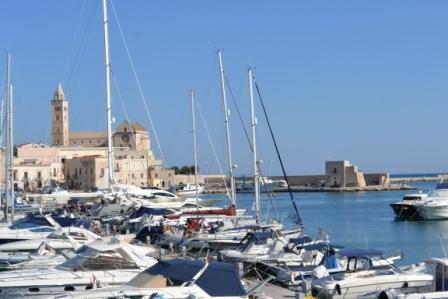
Perfect sailing with a 20 mile beam reach from Trani got us to Bari just in front of a thunderstorm and we did well to tie up at Marina Ranieri just before the deluge. Needless to say the afternoon saw a long lunch and a siesta! From Bari we planned a few days to explore inland.


It should have been a clue when we discovered the excess on the car insurance policy doubles for driving around Southern Italy. Cars drove at us from all directions, junctions were random and chaotic and parking was haphazard. Apart from having to drive on one’s mettle, it was a significant challenge to find any form of signposting and directions from the scant tourist information we had were woefully misleading! Southern Italy has some unique and beautiful historic sites that are kept well hidden and a secret from tourists!
Our first destination out of Bari was to Castel del Monte, a massive octagonal castle with Gothic corner towers and noted for its harmony of proportions, which crowned an isolated peak in the low plain south of Barletta. Our eagerness to explore the castle built in 1240 was thwarted by a local power cut, so it was not open the public.
We drove on the Matera further south, just in time to have a quick lunch and explore the fringe of this lovely old town before a massive storm hit overhead and we were forced to shelter in shop doorways before finally making a break for the car. Yes we did get soaked and disappointed the local traders trying very hard to sell us all umbrellas.


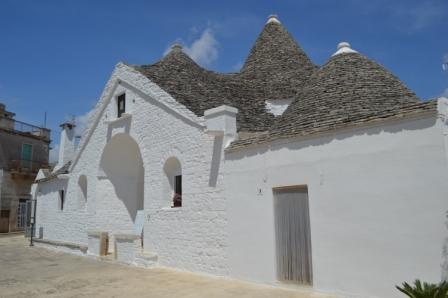
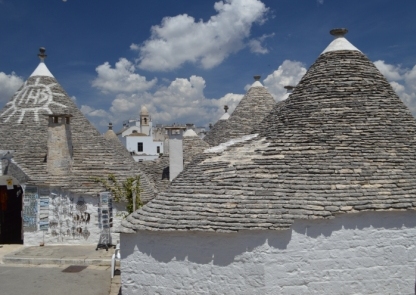
Alberobello is a beautiful village and a UNESCO World Heritage Site since 1996. We found a huge concentration of Trulli houses in a village that could have passed for Hobbiton and saved Peter Jackson a fortune in creating a film set in New Zealand!
The story goes that these small strange circular buildings of whitewashed dry stones with cone shaped roofs boasting pinnacles of various shapes and sizes, were built to avoid a building tax back in the 15th century. The King of Naples at the time levied a tax on mortar buildings, so the then count of Alberobello gave the order to build trulli ‘a secco’or ‘without mortar’, so that they could be easily dismantled in case of royal inspection. Once Alberobello obtained independence in 1797, trulli and subsequent houses were built using mortar becoming the dwellings we saw.



Finally time in Bari to explore the old town, the centrepiece of which is the famous Basilica of Saint Nicholas, which again is documented in our 2013 blog. Whilst enjoying a cool drink in a cafe here we literally bumped into friends from Farnham, who were on a one week South Italy sightseeing holiday! We have constant reminders how very small the world sometimes seems.
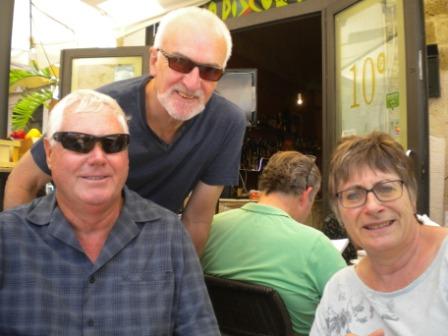
We said farewell to Peter and Sharon on Sunday 12th June having had a good week with them.
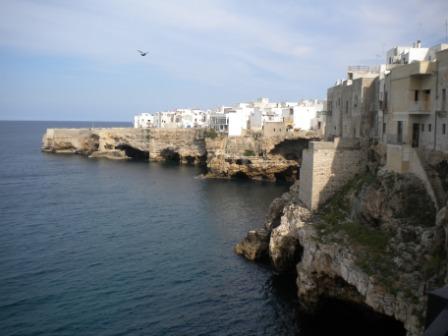
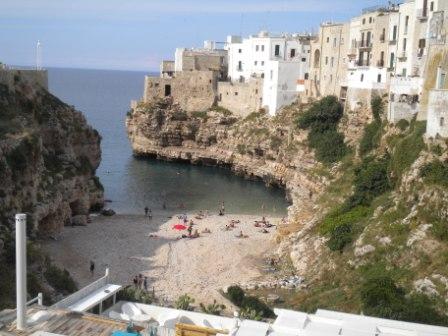
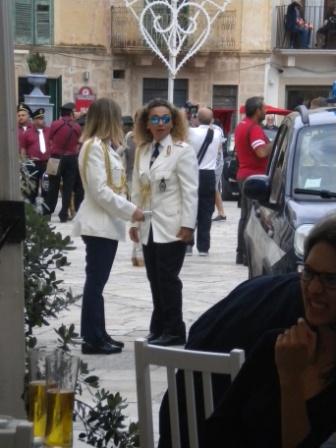
We continued our journey south to the new and very plush Casa Ponte Marina on the outskirts of the charming cliff top village of Polignano. By courtesy of a tuc tuc style taxi into the village we explored the narrow streets, bought pistachio nuts in the street market and enjoyed a beer as we watched the festival festivities get underway with brass bands regaled in different colours assembling in the main square. A purple capped cleric arrived at the cathedral to great rejoicing and later he was to hold a ceremony at sea accompanied apparently by a sacred statue of St Vito, the patron saint of Polignano, to bless the boats! We were amused by the female police presence, very cool! A wonderful firework display rounded off a fun visit.
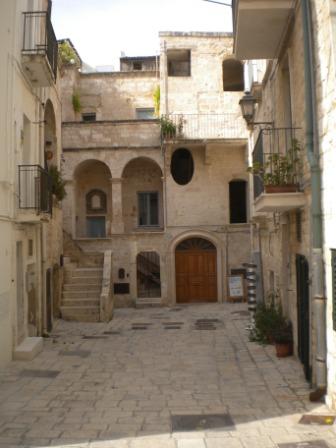
The next days with wind on the beam we had a chance to get to Brindisi before the gales arrived during the following night. It turned out to be the fastest sail we have ever done as we averaged 7.5 knots on the 42 mile trip. We were helped by a south going current of around 0.5 knots so at times our speed over the ground exceeded 9 knots. A mental note was made not to use this coast for a northbound passage! We were fortunate to have wind off the land so there was no fetch on the sea to make it uncomfortable, although the gusty wind meant we couldn’t relax. As soon as we got tied up in the Marina in Brinidisi soon after lunch, the winds increased to near gale force and two days later they are still raging.
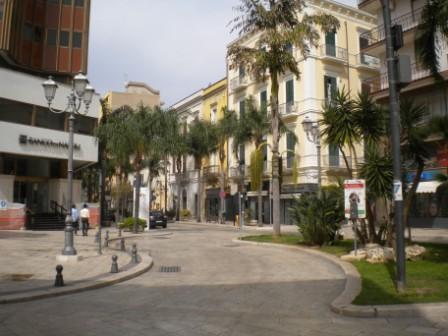
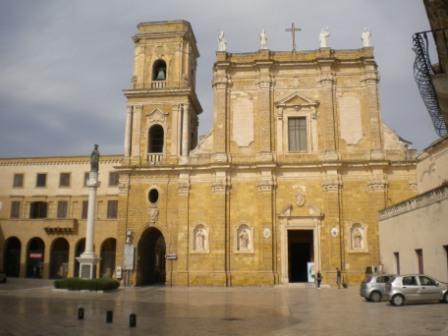
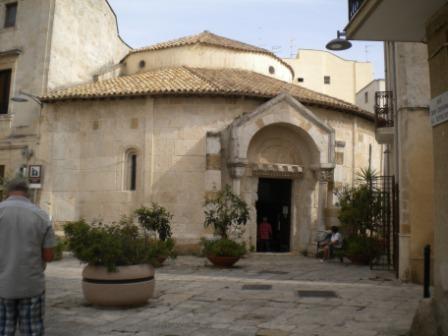
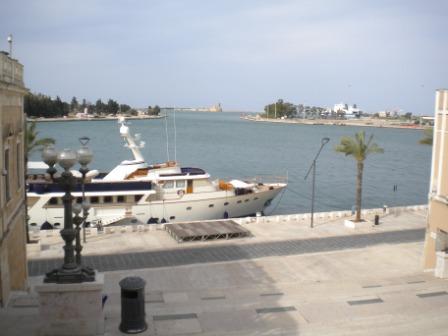
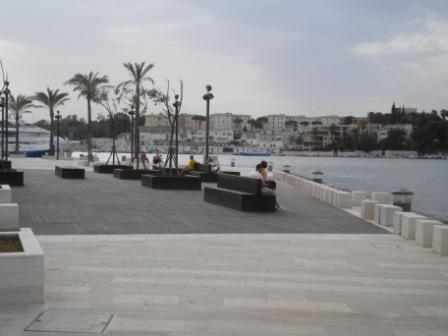
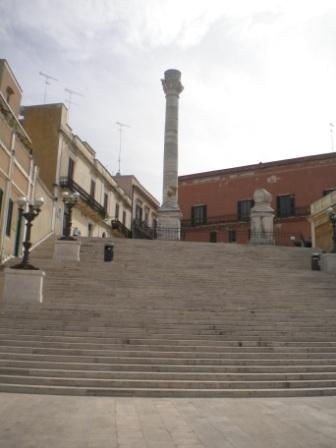
Mo feels particularly poignant to be here as some 72 or 73 years ago her father was here during the war as Brindisi was a place he talked about often. There is an attractive old town, a lovely cathedral and newly redeveloped main shopping streets and quayside. All in all it is very welcoming, there are contrasts of dirty streets and poor areas beside the cleaner and more affluent ones. Very typical of Southern Italy, and probably everywhere. There is a noticeable population of north African street sellers trying to make some sort of a living, and many of the locals are offering hospitality to the tourists they would like to see more of. Sights in Brindisi below include the beautiful cathedral, one of the many monuments, the quay and finishing with the famous roman Appian steps, marking the end of the Appian Way.
 Deja Vu
You must be logged in to post a comment.